
Silver Guide
How to Check if Silver Jewellery Is Real 925
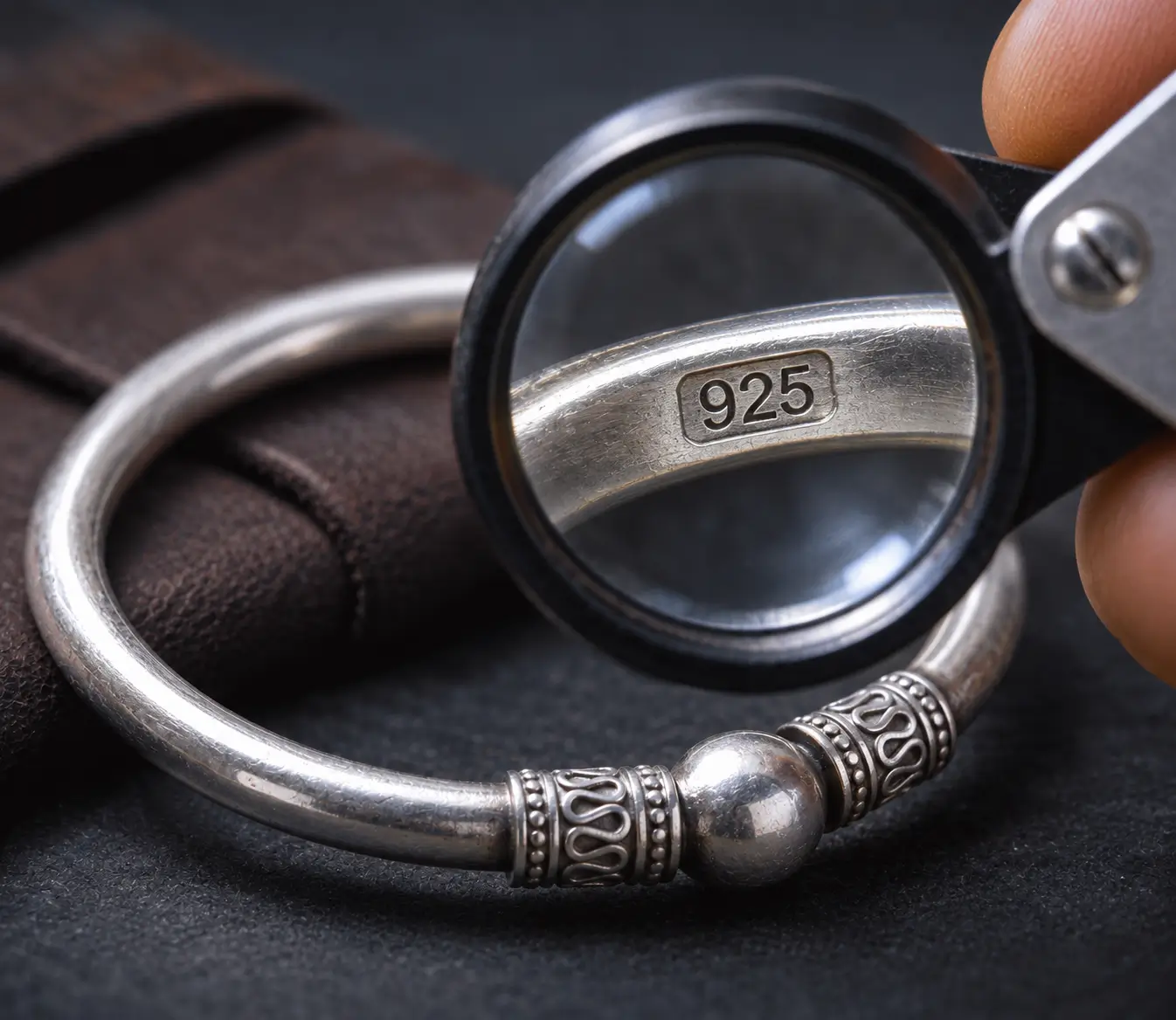
"Is this real silver?" is one of the most common questions we hear. Sterling silver, also called 925 silver, is 92.5% pure silver mixed with 7.5% other metals (usually copper) to make it strong enough to wear every day. Pure silver alone is too soft for rings, kadas and chains. Here is how to check what you are buying, starting with the most reliable method.
1. Check the BIS hallmark and HUID
In India, the Bureau of Indian Standards (BIS) hallmark is the strongest sign of genuine silver. It shows that an independent assaying and hallmarking centre has tested the metal, not just the seller.
What does a BIS silver hallmark look like?
A current BIS hallmark on silver has three parts: the BIS triangle logo, the purity grade (for example, 925 or 92.5) and a six-character alphanumeric HUID (Hallmark Unique Identification). The marks are tiny, so use a magnifying glass or your phone's camera zoom.
How do I verify the HUID?
Download the free BIS CARE app, open "Verify HUID" and type in the code. The app should show the purity and the hallmarking centre's details. If the code is not recognised, or the purity doesn't match what you were told, ask the seller about it.
Silver hallmarking in India has been voluntary, so not every honest piece carries one. Even so, a verifiable HUID gives you the most peace of mind.
2. Look for the 925 stamp
Most sterling silver is stamped "925", "92.5", "S925" or "Sterling", usually inside a ring band, on a kada's inner surface or on a chain's clasp tag. This is a good first sign, but anyone can stamp a number on metal, so treat it as a hint rather than proof. Marks such as "EP", "EPNS" or "Silver plated" mean the piece only has a thin coating of silver.
3. Simple home tests
These quick checks can help you spot obvious fakes. None of them can confirm 92.5% purity, so use them together and alongside the hallmark.
The magnet test
Silver is not magnetic. Hold a strong magnet (a neodymium fridge magnet works well) near the piece. If it snaps on firmly, the core is probably iron or steel. A slight pull may come from the clasp spring. If the magnet doesn't stick, that doesn't prove the piece is silver, because brass, copper and German silver aren't magnetic either.
The ice test
Silver conducts heat better than almost any other metal. Place an ice cube on a flat silver piece, such as a kada or pendant, and another on a steel or plastic surface. On real silver, the ice starts melting noticeably faster, almost as if the piece were warm. This test works best on larger, flatter pieces and is hard to read on thin chains.
The cloth-rub test
Rub the piece gently with a soft white cotton cloth. Real silver often leaves faint black or grey marks, which come from tarnish (silver sulphide). Plated items usually leave little mark, and if the rubbing shows a yellow or copper colour underneath, the coating is wearing off.
A caution about bleach and acid tests
Some guides suggest putting a drop of bleach on the jewellery and watching it turn black. We don't recommend this. Bleach can permanently stain or pit silver, damage stones and loosen finishes. The same goes for DIY acid kits. If you need a chemical or XRF test, have it done at a BIS-recognised hallmarking centre or by a trusted jeweller.
Does tarnish mean it's fake?
No, quite the opposite. Because 925 silver contains copper, it slowly darkens with air, sweat and perfume. Tarnish is normal and comes off with a silver polishing cloth. A piece that never changes at all over many months may be plated with rhodium or another metal.
4. Real 925 vs silver-plated vs German silver
| Feature | Real 925 sterling silver | Silver-plated | German silver |
|---|---|---|---|
| Silver content | 92.5% silver | Thin silver layer over base metal | None (copper, zinc, nickel) |
| Typical marks | 925 / 92.5, BIS hallmark + HUID | EP, EPNS or none | Usually none |
| Magnet | Doesn't stick | May stick if the base is iron | Doesn't stick |
| Over time | Tarnishes; polishes back to shine | Coating wears off, base shows through | Dulls or yellows, no silver to restore |
| Price | Highest of the three | Low | Low |
5. Buy from a trusted seller
The easiest way to avoid fakes is to choose who you buy from. Before you pay, check that:
- the purity (925) is written clearly on the product page or invoice;
- the seller says whether pieces are hallmarked and how to verify them;
- the price makes sense, because "real silver" at the price of fashion jewellery is a red flag;
- there is a real way to reach them, such as a phone number or WhatsApp, and a city they ship from.
Ask the seller directly whether the piece has any plating. A good seller will give you a clear answer.
Looking for hallmarked 925 silver?
At Neevra Jewels, every piece is 925 hallmarked silver, shipped from Delhi across India in 3–7 working days, with free shipping above ₹1,500.
Frequently asked questions
Is a 925 stamp enough to prove silver is real?
No. Anyone can stamp 925. A BIS hallmark with a six-character HUID that you can verify in the BIS CARE app is much stronger proof.
Does real 925 silver tarnish?
Yes. Sterling silver contains 7.5% other metals, usually copper, so it slowly darkens with air and moisture. Tarnish is normal and can be polished off with a silver cloth.
Will a magnet stick to real silver?
No. Silver is not magnetic, so a strong pull points to an iron or steel base. However, passing the magnet test alone does not prove an item is silver, because brass and German silver are not magnetic either.
What is German silver?
German silver is an alloy of copper, zinc and nickel. It contains no silver at all, despite the name.
Is BIS hallmarking compulsory for silver in India?
Silver hallmarking in India has been introduced on a voluntary basis, so not every genuine piece carries it. When a hallmark is present, the HUID lets you verify it yourself.